October’s birthstones, opal and tourmaline, are a celebration of color and individuality; symbolizing creativity, balance, and the radiant beauty of change.
Opal

Opal is a captivating gemstone. It is not classified as a true crystal but rather as a mineraloid, composed of microscopic silica spheres and water. This structure gives some opal, dubbed precious opal, its signature iridescence, also known as ‘play of color’. Common opal lacks this optical phenomenon, though its structure is basically the same.
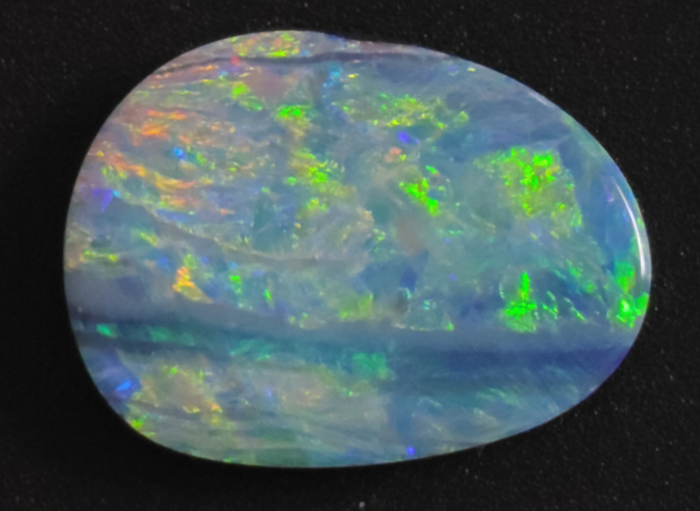
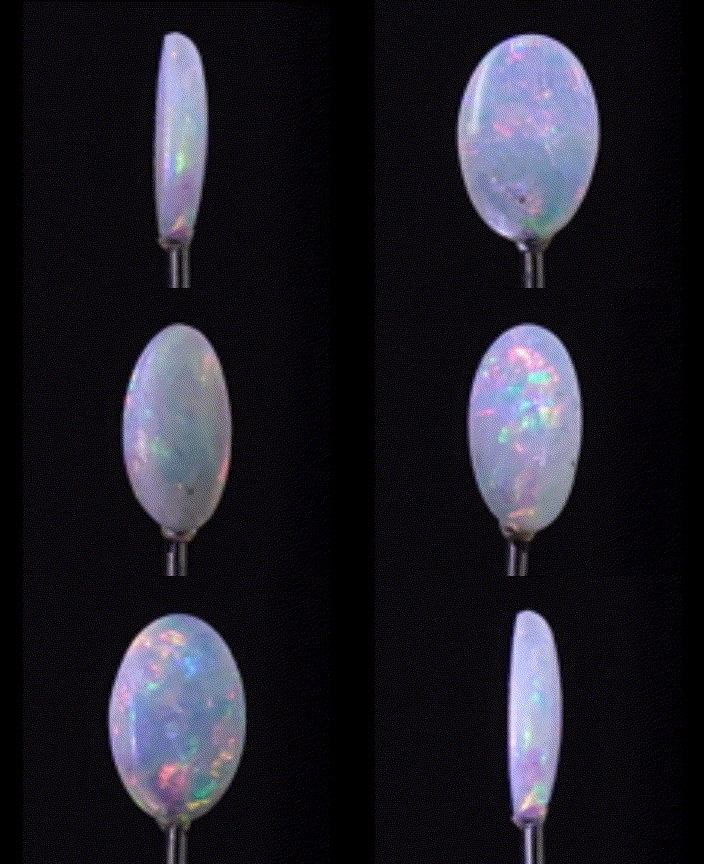
The name “opal” is thought to trace back to the Sanskrit word “upala” (उपल), meaning “jewel,” and adopted by the Greeks in the word “opállios” (ὀπάλλιος). Though there are other suggested origins, this one holds more credence, as opals were a prized gem for thousands of years but the word opállios only became common in Rome around 250BC after an uptick in trade from Southeast Asia.
Opals can occur in nearly any base color, with white, gray, and green being most common and black opal the rarest. Opal can also occur in fossils, where silica fills the space left by something organic. As with most opal, precious opal fossils are comparatively rare, but common enough that most rock shops have a couple nice specimens.
The largest known precious opal, weighing approximately 55,000 carats, was found in Australia by Stuart Hughes. Truly massive by any account, but especially when you consider that the previous title holder was 11000ct, and the largest cut opal is only 3700ct.
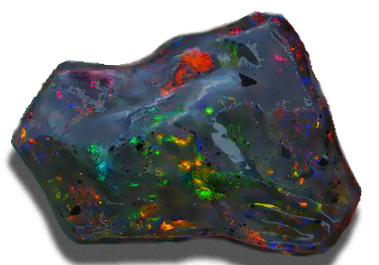
Opal is relatively soft and delicate so it is not generally suited to daily wear without extra caution. Their composition makes them sensitive to heat, chemicals, and abrasion. Their play of color depends partly on the water trapped within the stone so, to prevent the loss of this water, some opals are sealed or stabilized, though high quality opal usually doesn’t need this treatment. Rough opals are commonly stored in water or light mineral oil before being polished to preserve their moisture content, and to enhance their transparency so the cutter can see further into the stone.
When cleaning opals, it’s best to use a soft brush or cloth with warm water and mild dish soap. Ultrasonic and steam cleaners should never be used and soaking should be avoided, especially for composite opals like doublets and triplets. When storing opals, keep them separated from other jewelry, ideally wrapped in a soft cotton cloth. For long term storage, opals should be kept somewhere with a stable temperature and humidity, ideally around 70°F between 40% and 60% relative humidity, to prevent cracking or the play of colors to fade.
Tourmaline

Tourmaline is one of the most chemically diverse minerals found in nature, with 41 varieties recognized by the International Mineralogical Association. All forms of tourmaline are unified by the presence of boron in their composition. This incredible chemical flexibility gives rise to tourmaline’s most distinctive trait: its vast range of colors. While it’s estimated that as much as 95% of all tourmaline is black, tourmaline comes in everything from deep greens and vibrant pinks to even crystals banded with two or three hues. The only true exception is opaque white, a color tourmaline simply does not occur in.
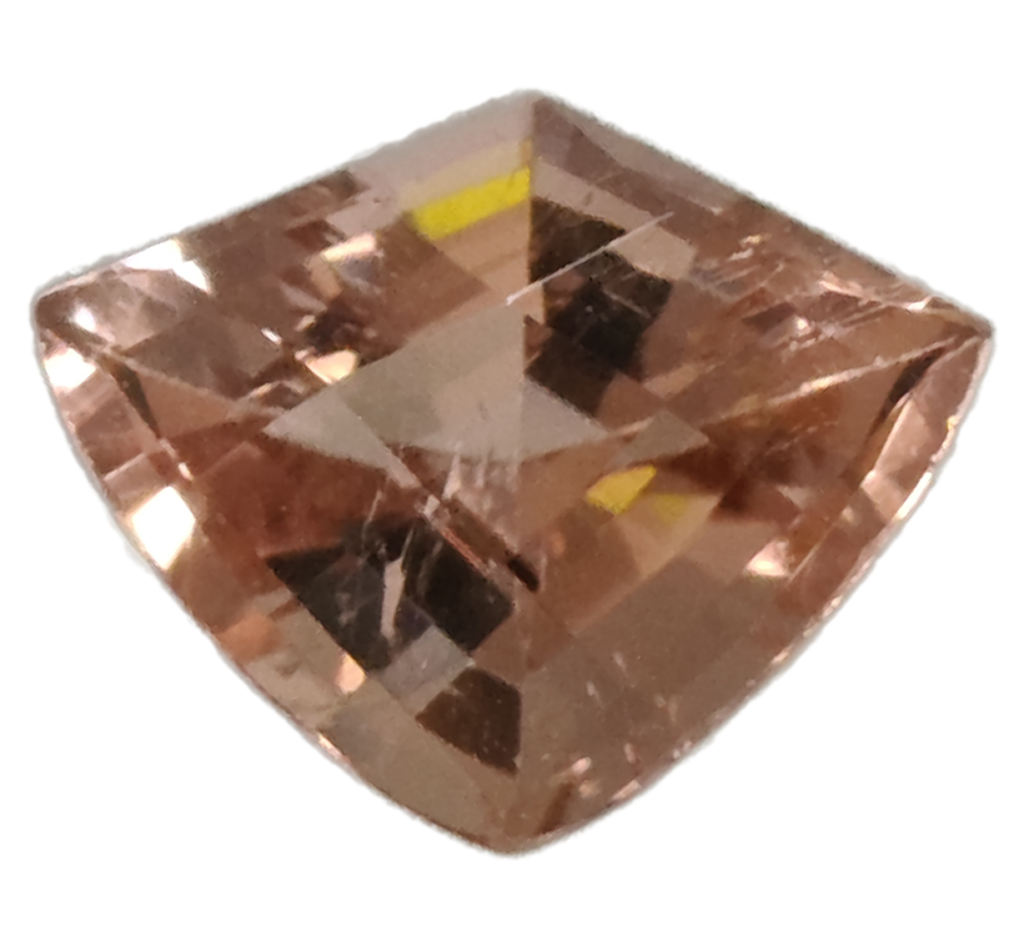
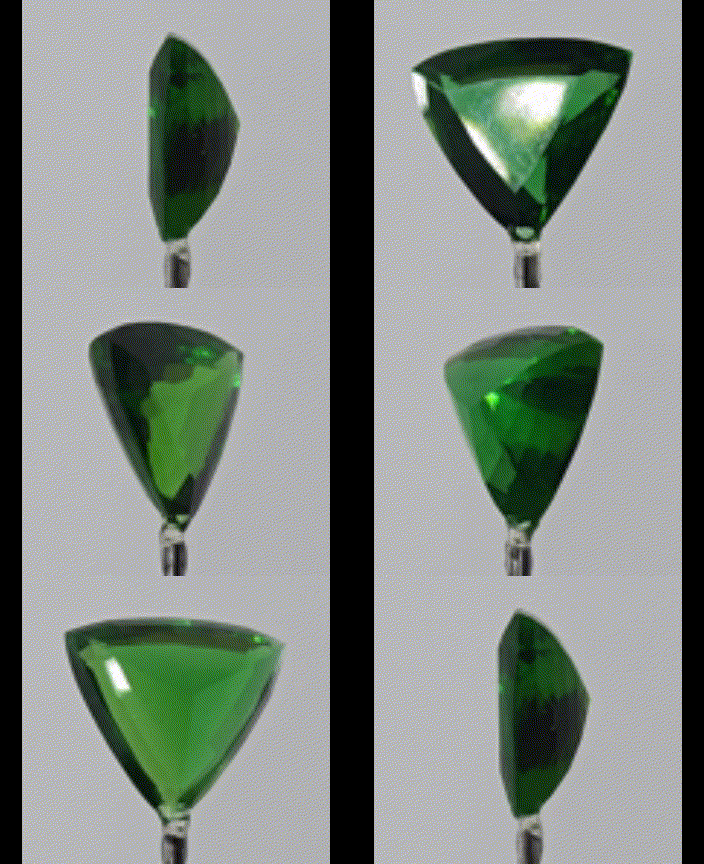
Despite the relative rarity of colored tourmaline, most tourmaline gemstones are not treated. In some cases, dark red stones may be heat-treated to enhance clarity and color, while pale pink or near-colorless stones might undergo irradiation to increase their color saturation. Generally, irradiation has little impact on the gem’s value, but other forms of treatment can reduce the desirability of a stone compared to a natural gem of similar quality.
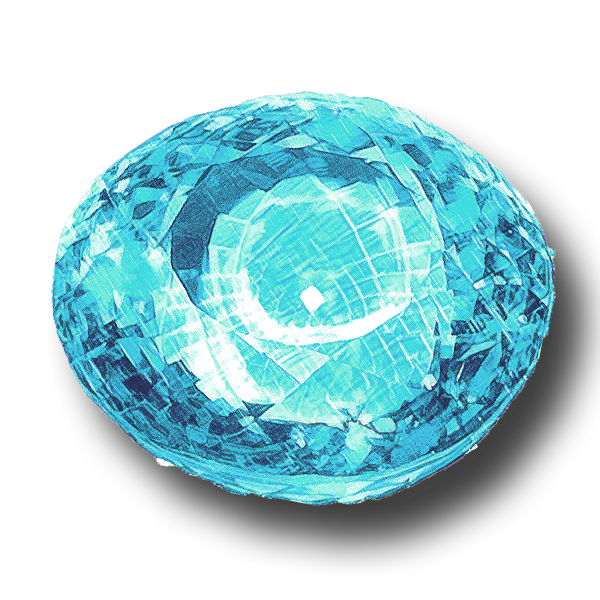
Though tourmaline is relatively common in nature, high-quality, gem-grade crystals are much rarer. One of the most exceptional examples is “The Etherial Carolina Divine Paraiba”, a flawless electric blue faceted tourmaline weighing over 190 carats, the largest cut tourmaline in the world.
In terms of care, tourmaline is moderately hard but can be brittle due to internal stress lines and inclusions. It can be worn daily but should be removed during activities where sudden impacts are likely. Cleaning should be done gently using a soft toothbrush, mild dish soap, and warm water. Ultrasonic and steam cleaners should be avoided, especially for opaque or heavily included stones. Opaque stone should also not be cleaned with solvents or allowed to soak for more than a few minutes.