March’s birthstones are a sublime pairing of subtlety and contrast. The limpid blue gems of aquamarine add sparkle and class without being ostentatious, and the deep greens and bold reds of bloodstone elegantly demonstrate why it holds such significance in history and mysticism.
Aquamarine
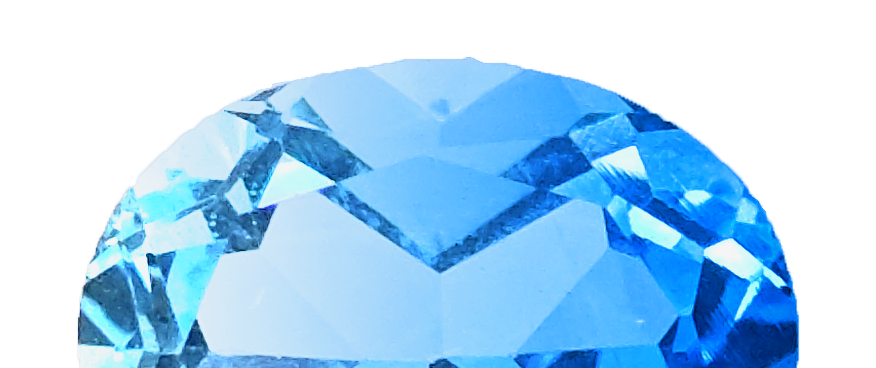
Aquamarine is a member of the beryl family, making it a sibling to emerald. Its name, first appearing in records from 1677, is Latin for “water of the sea,” alluding to its blue color and the clarity its gems often have. Since aquamarine can describe both a gemstone and a color, it is important to clarify whether you are referring to this gem or one of the many others that can have the same color, such as tourmaline or topaz.
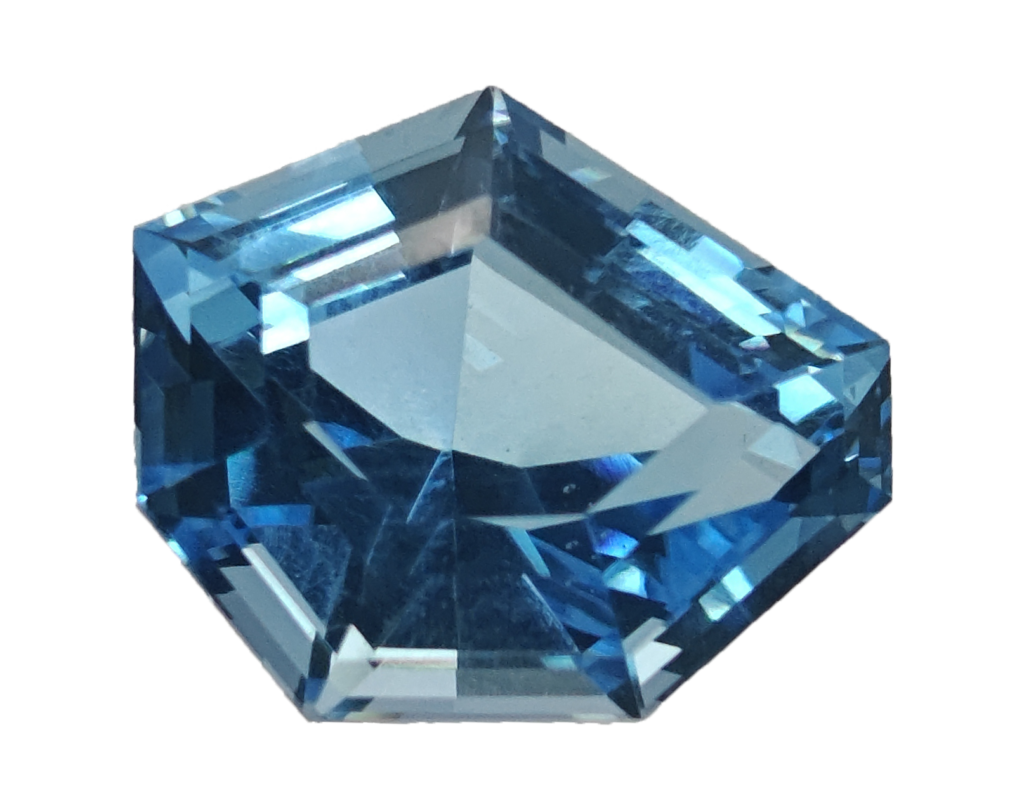
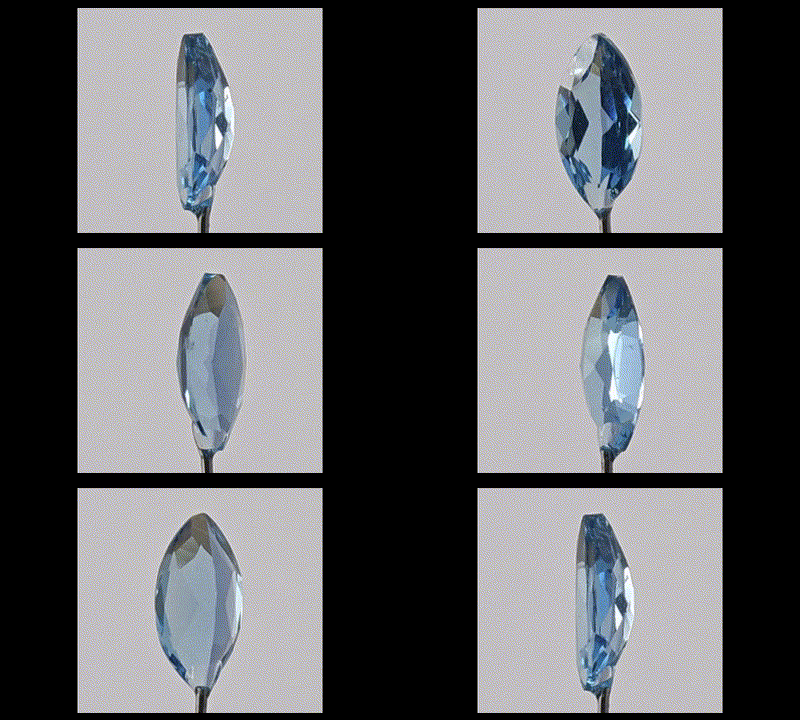
Aquamarine’s color ranges from nearly colorless to royal blue and may show yellow, greenish, or even pink casts due to trace minerals or irradiation. Lower grade stones are sometimes heat treated to mute the greens and yellows so that the blue tones can come to the forefront.
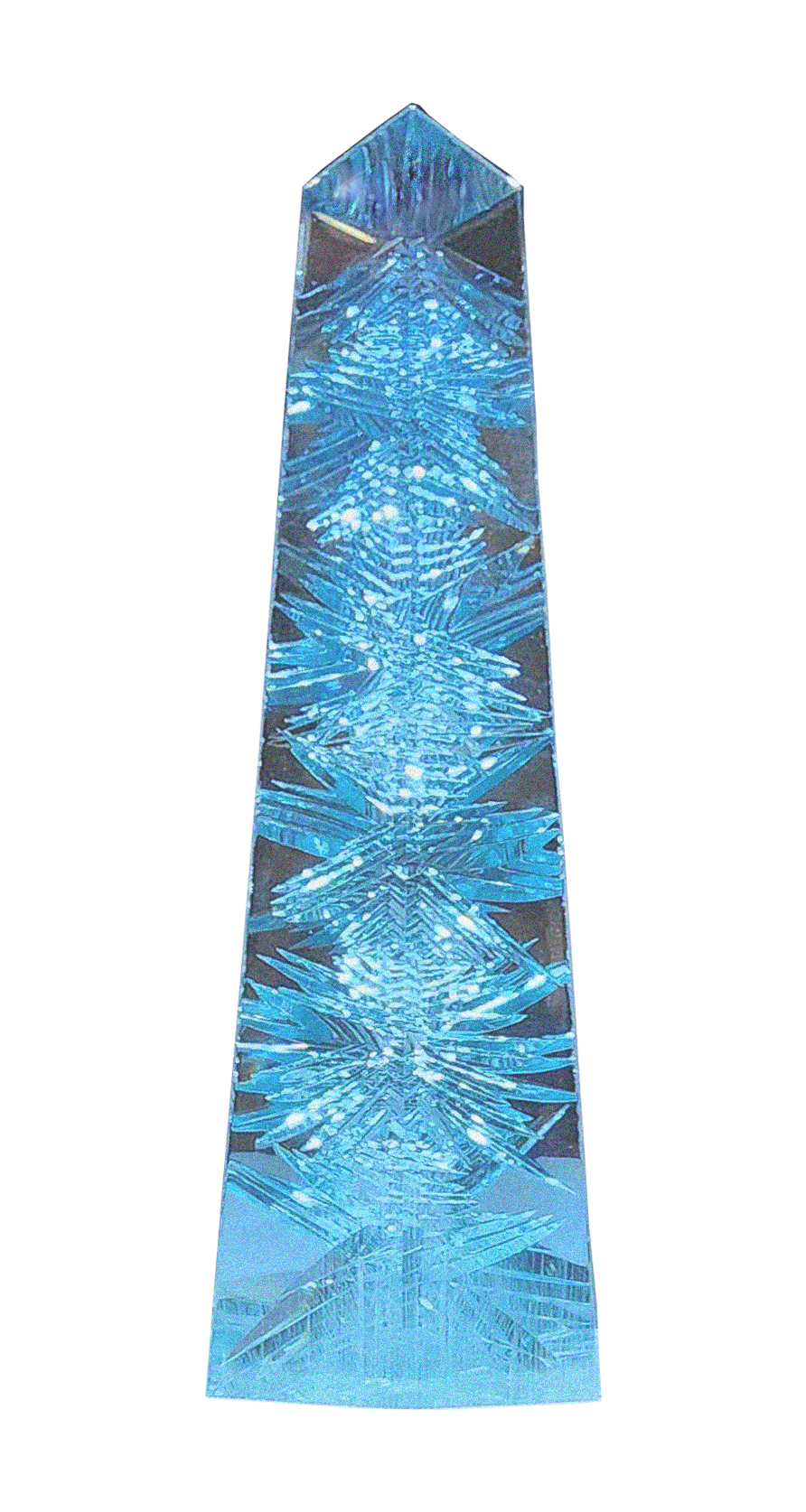
The largest cut aquamarine, currently located in the National Museum of Natural History, is called the Dom Pedro Aquamarine. Shaped into a striking obelisk, it stands roughly 14 inches tall and weighs more than 10,000 carats.
Aquamarine is relatively hard and is typically durable due to the low occurrence of inclusions, though you should still remove aquamarine jewelry when doing manual labor or exercise. Inclusion free stones tolerate ultrasonic cleaning but steam cleaning larger stones should be avoided as thermal-shock can cause them to fracture. Regular cleaning with mild soap, warm water, and a soft brush is recommended to keep aquamarine looking its best.
Bloodstone
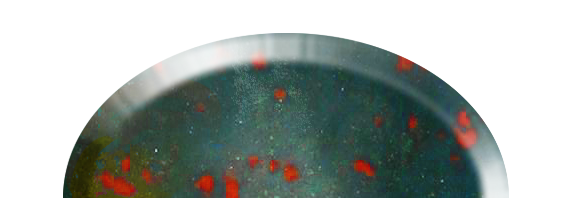
Bloodstone is an aggregate mineral made chiefly of dark green chalcedony and jasper speckled with iron inclusions, usually hematite, that create its distinctive red-orange spots. There are other stones called bloodstone but, while the birthstone traditionally refers to this composition, most people accept the other forms due to the increased availability and broader variation in their colors and appearance.
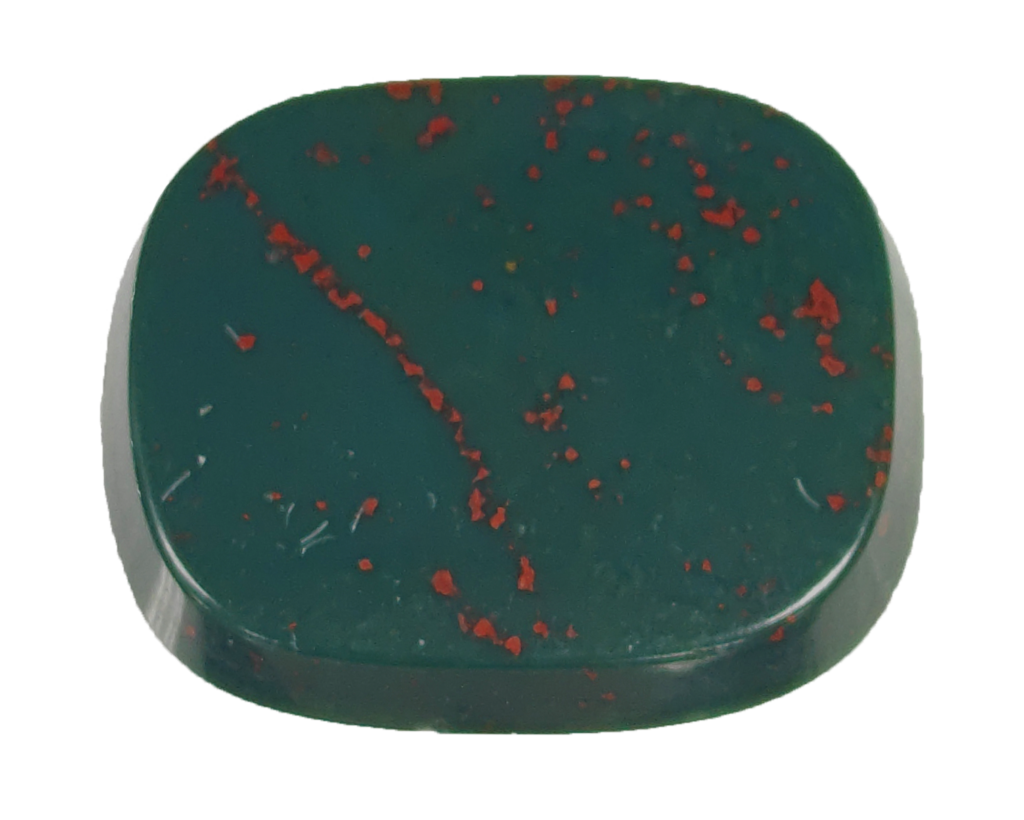
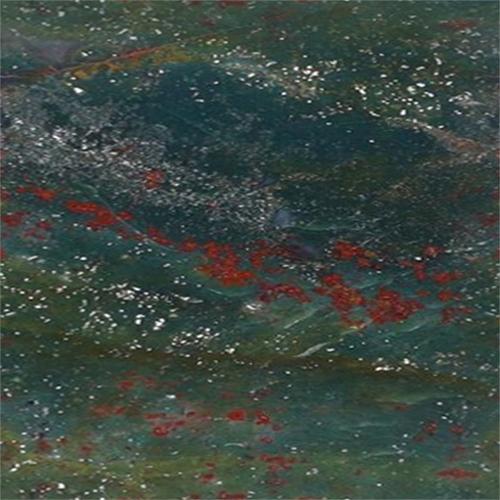
Another name for bloodstone is heliotrope, a name Pliny the Elder attributed to the way it reflects the sun when placed in a vessel of water, though what he meant by this is unclear.
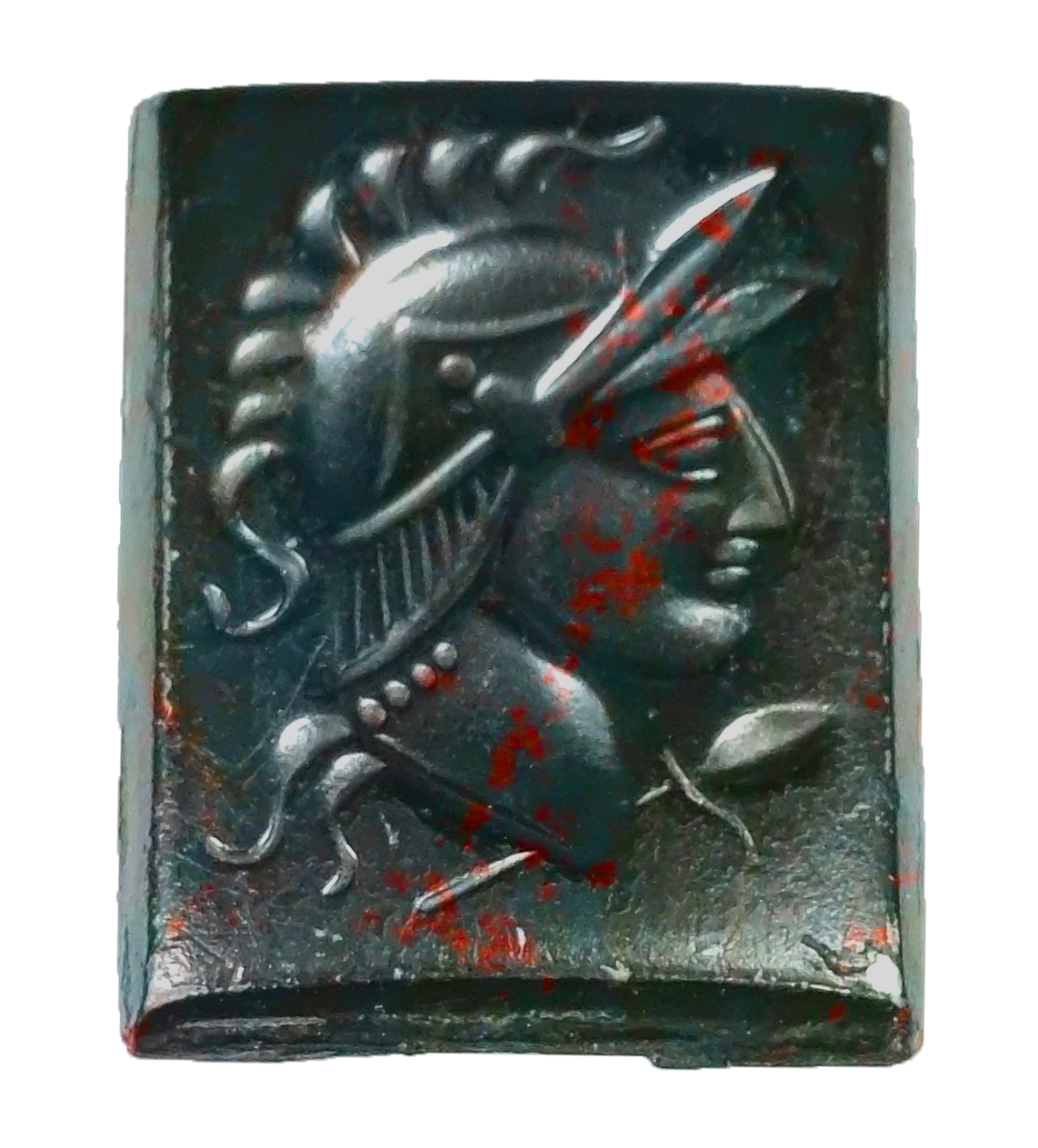
In addition to its wide range of symbolic uses, bloodstone’s toughness allows it to be carved into beautiful and intricate shapes. From royal seals, to statues, and even delicate drinking vessels fit for a king. Many of these artifacts have survived for centuries but, probably due to the understated appearance of bloodstone, lack the mass appeal of rarer or more glittery artifacts.
Bloodstone is relatively hard and durable, but as an aggregate stone it is more vulnerable to impacts or chemicals than other gemstones of similar hardness. Ultrasonic and steam cleaning should be avoided, as should prolonged soaking. Exposure to solvents, cosmetics, or cleaning products can dull or discolor the stone. Occasional cleaning with warm water, mild soap, and a soft bush or cloth should be all that is necessary to keep bloodstone looking its best.