April’s birthstone, diamond, is often associated with brilliance and endurance, but its appeal runs deeper than sparkle alone. Formed under immense pressure over extraordinary spans of time, diamond has long been valued as a symbol of strength, clarity, and commitment. Its familiarity makes it feel timeless, while its natural variation ensures no two stones are exactly alike.
Diamond
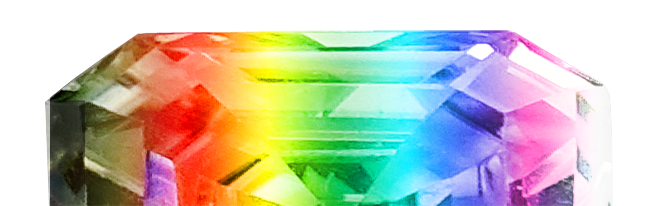
Diamond is best known as the hardest natural material, but its remarkable properties extend far beyond durability. It has an exceptionally low coefficient of friction and the highest thermal conductivity of any natural substance, making it invaluable both in jewelry and in industrial applications. This is not surprising as diamonds were used as tools first, long before they began being used as ornamentation. Used to drill, carve, and engrave stone and metal, diamond has shaped human culture and technology for centuries.
Most diamonds range from yellowish to brown due to trace elemental contamination, especially nitrogen. Other colors that occur naturally are blue, green, black, pink, orange, purple, and red, though some colors require irradiation or uncommon geologic conditions to form so they are rare to find un-enhanced. Some diamonds may also exhibit fluorescence, absorbing high energy light and re-emitting it at lower energies. This trait is not wholly undesirable, and may even add vibrancy to some colored diamonds, but strong fluorescence tends to make diamonds appear hazy or dull, muting the brilliance many people seek in a diamond.
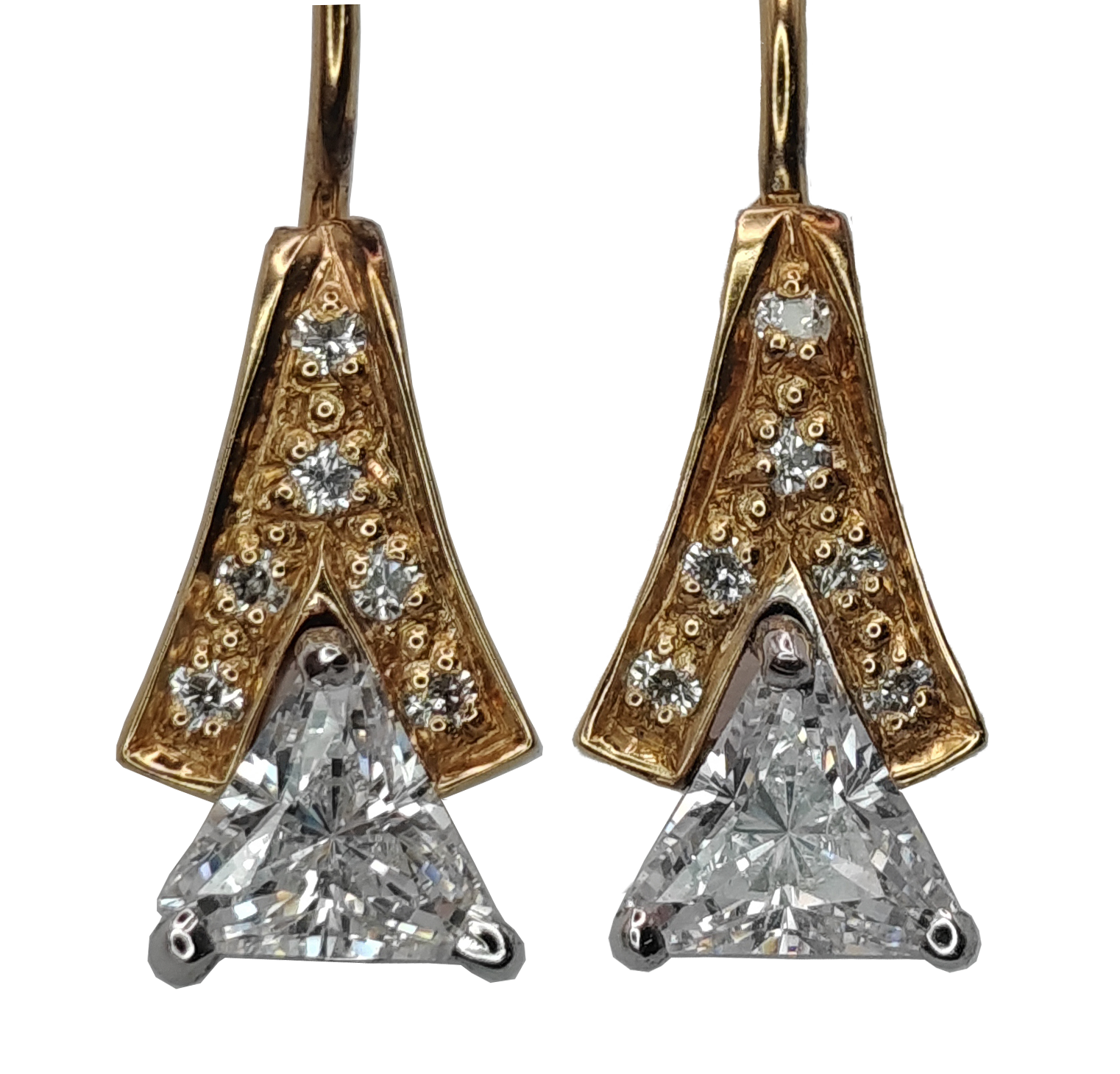
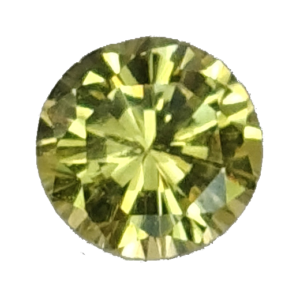
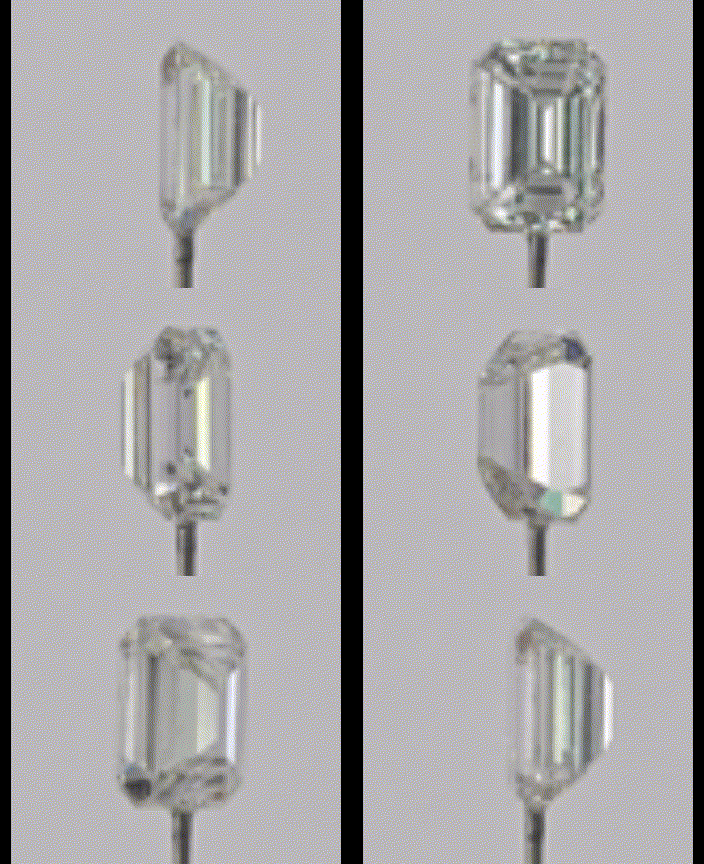
A diamond’s iconic sparkle comes, in part, from its high refractive index, which allows it to capture light and redirect it upward through the crown of the stone. Its famous “fire”, the flashes of prismatic color, occurs when that light is diffracted and separated into its component wavelengths. In their natural state diamond crystals typically form in octahedral shapes with subtly rounded edges. The faceting of diamonds required several technological developments, so most of the signature diamond cuts are relatively modern, developed in the late 19th century and perfected as the technology matured.
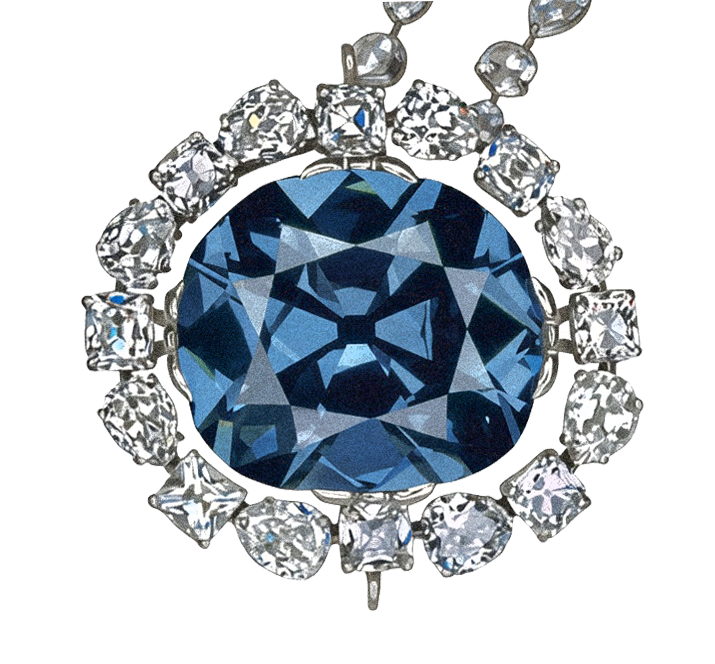
One of the most famous diamonds in the world is the Hope Diamond, a 45.52-carat deep blue stone known for its distinctive color and long, well-documented history. It is part of the permanent collection at the National Museum of Natural History.
Being so hard and resilient, diamonds are easy to care for, but they are not indestructible. Diamonds are still vulnerable to fracturing if struck against a hard object, and may also crack due to thermal shock. Some cuts and setting styles are more vulnerable than others. In general, long and thin cuts with minimal support are the most at risk.
Diamonds are naturally hydrophobic and lipophilic, so cleaning them requires a bit more work than many other stones. Low-power ultrasonic cleaners work well enough, and there have been several cleaning solutions advertised over the years specifically for diamonds. A simple diamond cleaning paste can be made with baking soda and a diluted ammonia based window cleaner (1 part cleaner, 10 parts water). Gently scrub the diamonds with the paste using a soft bush and then rinse thoroughly with cool water.