From the red of burning coals, to the pinkish red of a summer sunset, ruby embodies the intensity and passion of the month of July. Few stones command attention so immediately, or have carried such symbolic weight across cultures and centuries.
Ruby
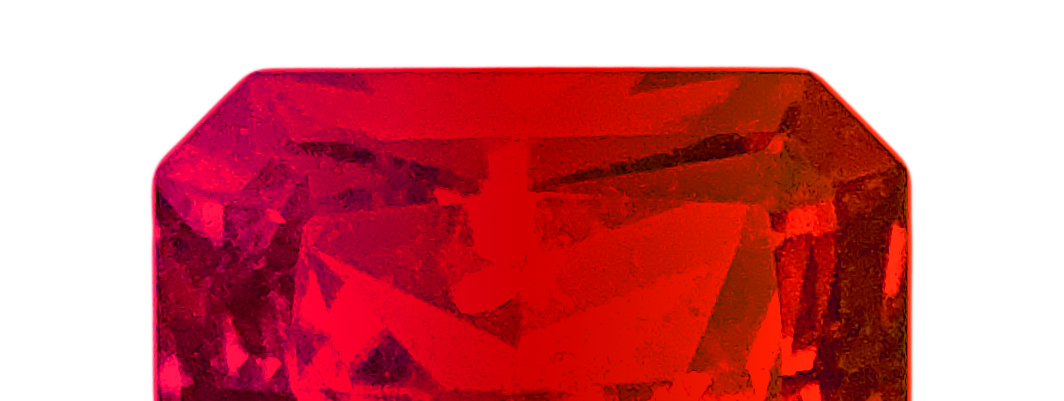
Ruby is the red variety of corundum, the same mineral family as sapphire. Its color is caused by trace amounts of chromium, which also give ruby its characteristic fluorescence under certain lighting conditions. For much of history, rubies were grouped loosely with other red gemstones such as spinel and garnet, as their shared color made them difficult to distinguish by eye alone. It was not until advances in mineralogy revealed their distinct compositions that ruby became clearly defined as its own gemstone.
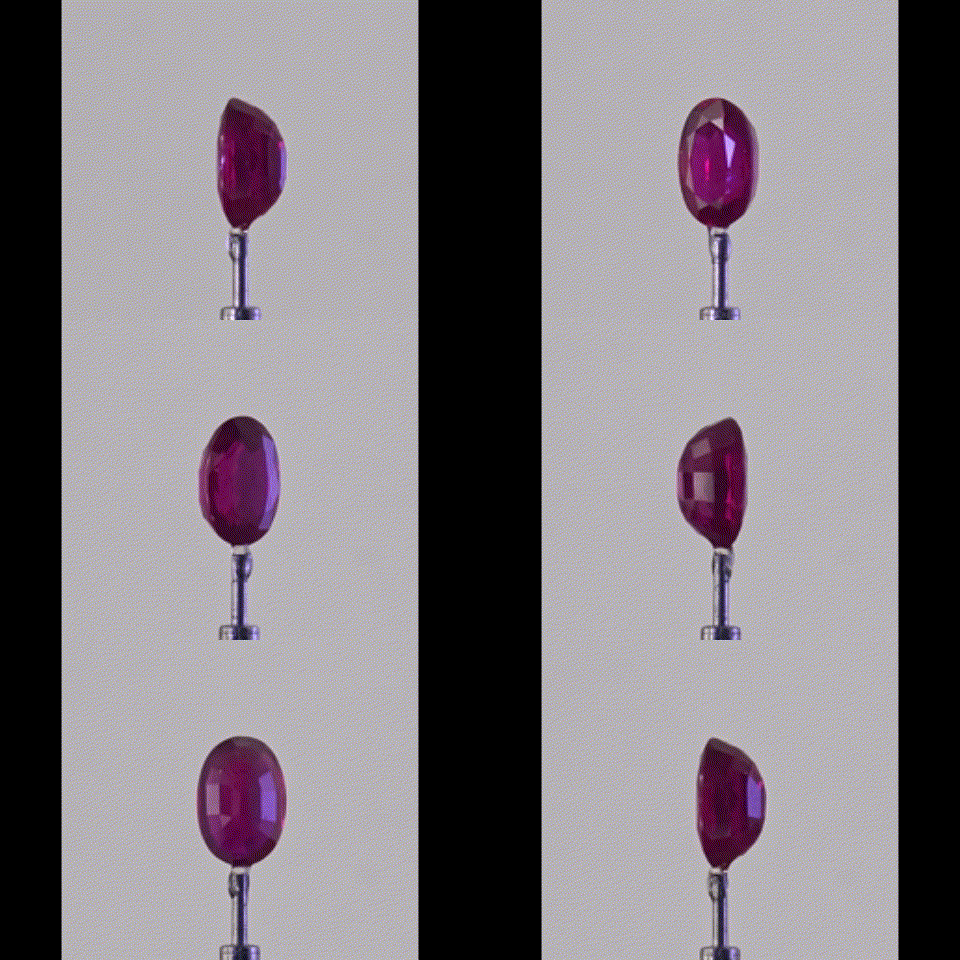
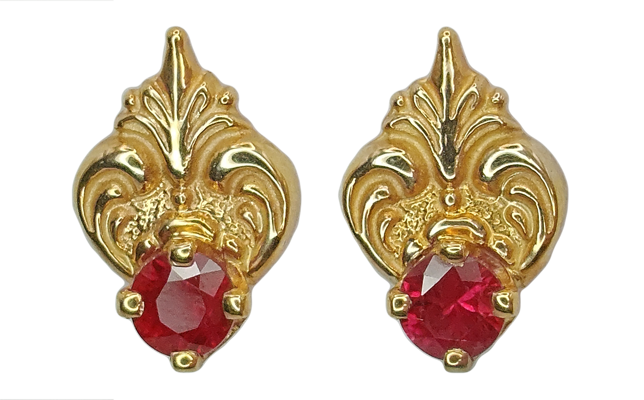
While clarity is important, ruby is judged first by color. The most valued stones display a vivid, balanced red with neither brown nor overly purple undertones. Inclusions are common in natural ruby and, as with emerald, can help distinguish natural stones from synthetic or heavily treated material.
Rubies have been mined and traded for thousands of years. Historically, some of the most famous stones came from Myanmar, particularly the Mogok region, where rubies with exceptional color and fluorescence were found. Today, important sources also include Mozambique, Thailand, Sri Lanka, and Madagascar, each producing rubies with their own characteristic hues and internal features.
Most rubies on the market have been heat treated to improve color and clarity, a practice that is widely accepted in the gem trade. Heat treatment can lighten dark stones or reduce visible inclusions without altering the ruby’s essential structure. Untreated rubies of fine color are especially rare and command significant premiums. More invasive treatments, such as glass filling, are less desirable and can affect durability and long-term value.
Among the most notable rubies ever documented is the Sunrise Ruby, a 25.59-carat pigeon-blood red stone mined in Myanmar. In 2015, it sold at auction for over 30 million dollars, setting a world record for a ruby and underscoring the value placed on exceptional color and provenance.
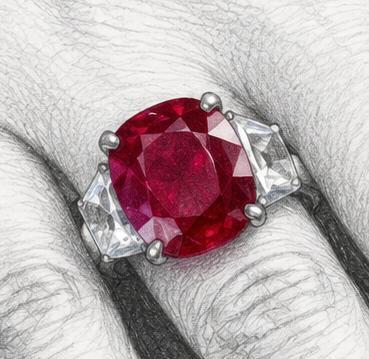
Ruby is one of the hardest gemstones, making it well suited for everyday wear. However, inclusions and treatments can create internal stress, so care is still advised. Cleaning should be done with warm water, mild dish soap, and a soft brush. Ultrasonic cleaners are generally safe for untreated or heat-treated rubies but should be avoided for stones with fracture filling or other advanced treatments. As with most fine jewelry, removing ruby pieces during strenuous activity helps reduce the risk of damage.