February’s birthstone is amethyst, a prized gem with storied history. The many myths and legends surrounding amethyst, along with its soothing purple colors, can spark the imagination during the long, cold February nights.
Amethyst
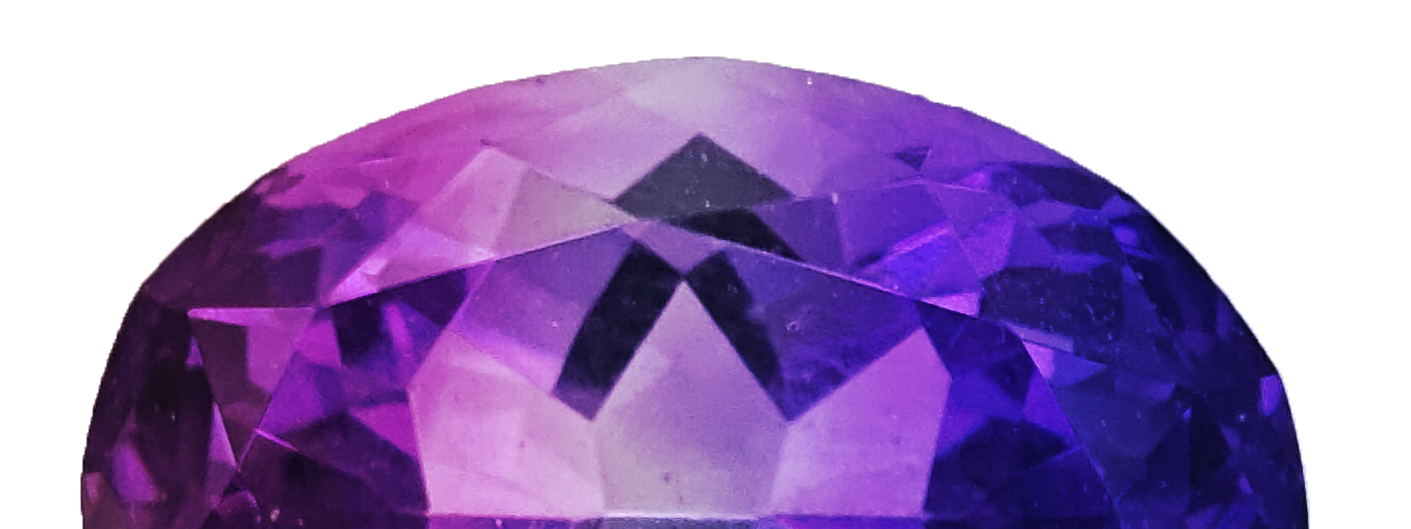
Amethyst has long been valued for its rare beauty. Artifacts of amethyst jewelry have been found by archaeologists in Egypt and the Middle East dating back to around 2000 BCE. Its name comes from the ancient Greek ‘amethystos‘, a term rooted in the belief that the stone could protect its wearer from drunkenness. Some other legends have amethyst protecting warriors in battle, lending wisdom to monarchs, or healing the wounded. References to it can even be found in the old testament.
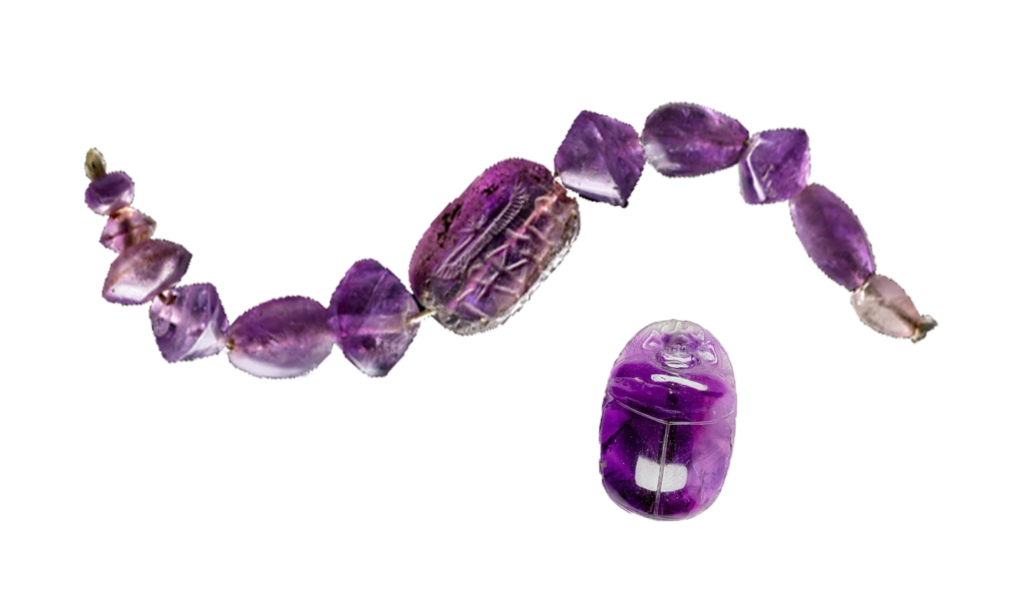
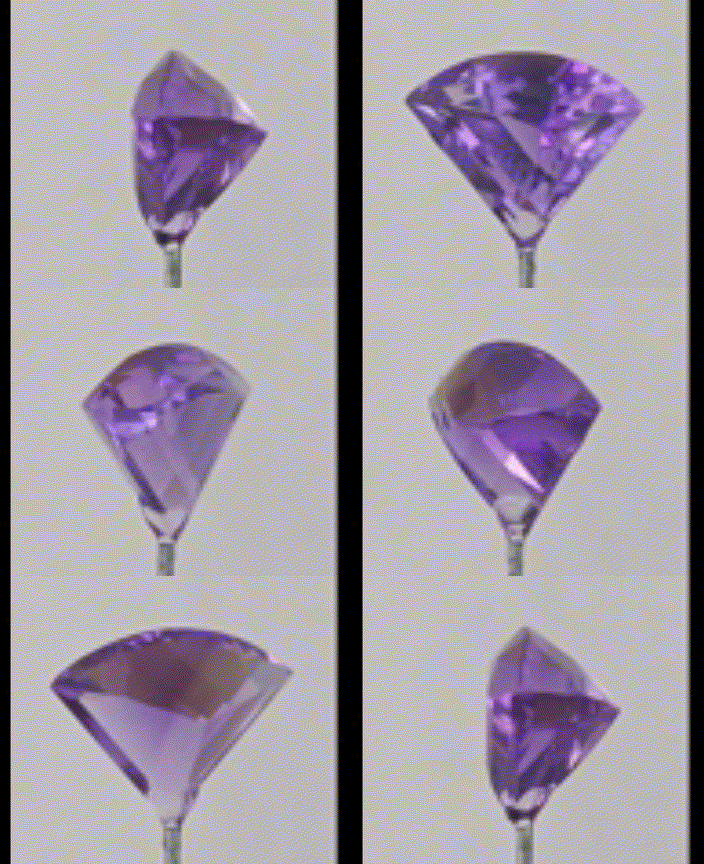
Amethyst is a form of quartz but, while there are many different colors of quartz, only the purple varieties count as amethyst. Though this may be a narrow slice of an otherwise diverse crystal, amethyst still has some variation in color, ranging from hues of the red tinged ‘raspberry’ amethyst to the blue-violet Lusaka amethyst, and intensities from a pale lilac to dark concord grape.
Geologically, most amethyst forms under volcanic or hydrothermal conditions, where silica-rich fluids crystalize into quartz rich with iron oxide. Its purple hue then arises from natural irradiation ionizing the iron oxides within the crystal lattice, or from subtle lattice disruptions caused by other trace elements.
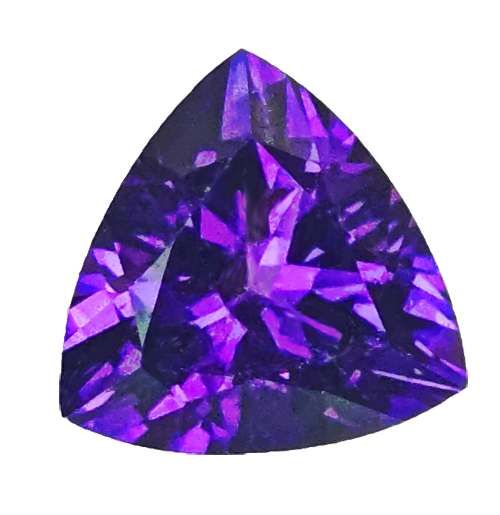
Amethyst may require special care to maintain its appearance. With moderate hardness, it stands up well to daily wear in earrings and pendants, but it is more susceptible to scratches and chips when set in rings or bracelets. Cleaning should be done with warm water, gentle soap and a soft brush. Steam and ultrasonic cleaners should be avoided. Over time, exposure to heat or sunlight can cause the color to fade, but the color can be restored or enhanced through controlled irradiation in a lab.